Grace's mended poem manuscript
Our Chemical HeartsGrace's mended poem manuscript is both a submission to the Westland Post and a small, material record of damage made visible rather than concealed. Torn into pieces, taped together, and marked with gold, it gives the idea of Kintsukuroi a paper form; its title, “I do not love you,” becomes Henry's last reading of Grace's words and part of his movement toward recovery.
Physical Form and Repair
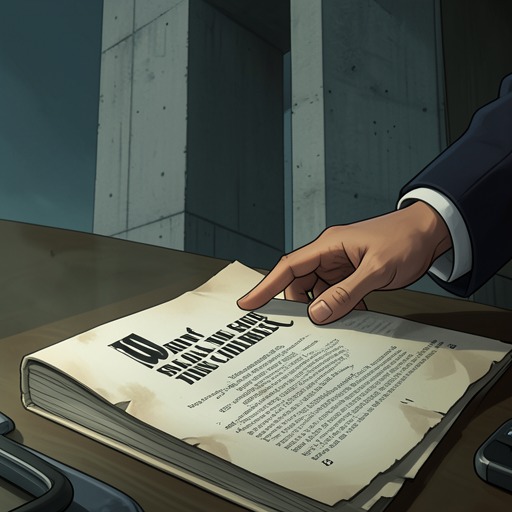
The manuscript is a sheet of paper torn into little pieces and reassembled with clear tape on the back. Its text is interrupted by jagged scars, each gone over with gold ink. The gold does not erase the breaks: it makes their course conspicuous, turning the damage into part of the page's appearance. Henry recognizes the result as Pablo Neruda's poem rendered in paper, a physical counterpart to the Kintsukuroi image of broken things joined with gold.
The Poem and Henry's Last Reading
Grace's contribution is identified as a piece for the Westland Post. Its title, “I do not love you,” has been circled in gold. Henry expects the title to hurt him, but finds that it does not; he reads the poem again for the last time. The manuscript therefore carries both Grace's work and the fact of her refusal, yet the act of reading no longer produces the same immediate wound. Its gold circle draws attention to the rejection even as Henry's changed response signals that he is beginning to live beyond it.
Handoff and Significance
The closing sequence connects Grace's paper contribution with an envelope Henry gives to Lola Leung, calling it his redemption. Lola reads what is inside and grins. The manuscript's role thus extends beyond Henry's private reading: it passes from Grace through him to Lola, who receives it as part of the Westland Post's work. Its mended surface also resonates with Henry's later description of his recovery: during the remainder of the semester, Grace is no longer the first thought that greets him each morning, and he recognizes that the wound is healing. The page does not undo what has been broken; it preserves the seams while allowing the story to move forward.